 MakersLounge
Founder and host · 2025 –
An events program for Toronto's AI builders
20+ events, 1,040 approved, 320 in the room, workshops at 80% show-up
An events program for Toronto's AI builders
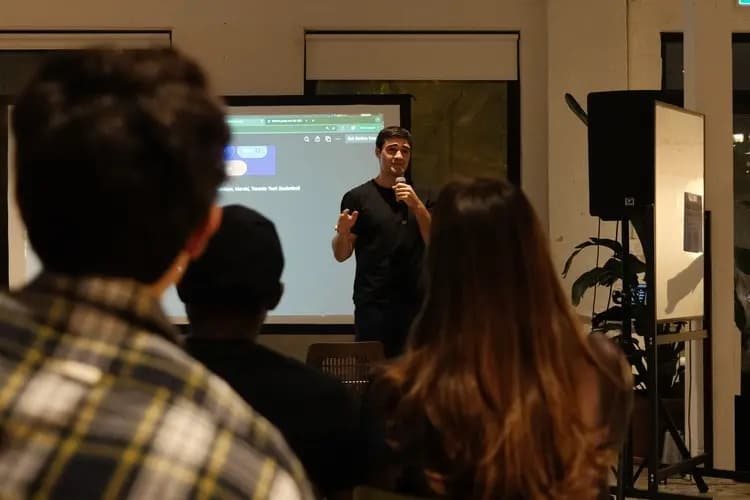
20+ events in a year, from meetups to workshops to hackathons. 1,040 builders approved, 320 check-ins, and workshops that fill 80% of their seats.
- For
- MakersLounge
- As
- Founder and host
- When
- 2025 –
- Site
- makerslounge.ca
The challenge
Builders thrive when they share their work. The people building with AI in Toronto had no shortage of ideas; what they lacked was a place to make those ideas real by telling one person, face to face, and getting a reaction. Online you post into a void. In a room, someone asks the question that changes the project.
MakersLounge started as five people at a coffee shop. The job was to turn that into a program: something that happens on a schedule, that people trust enough to give up an evening for, and that gets better each time.
The program
Four formats, each with a different job.
- Meetups. Monthly build-and-demo nights, mostly at New Stadium on Walnut Ave. Show what you're building, meet the people who care about the same problem, leave with one new person to follow up with.
- Workshops. Hands-on sessions where everyone leaves with something running: a Claude Code workshop and an AI agent-building workshop at Toronto Metropolitan University, and an online session on working with context in Claude.
- Hackathons. An AI hackathon night with MuleRun and an innovation hackathon for Toronto Tech Week, with teams formed on the night and demos at the end.
- Maker Mondays. Short online demo nights between the in-person events, so the community doesn't go quiet for a month.
How I ran it
The unglamorous way. Found venues. Invited people, one at a time at first. Built the itinerary for each night so a first-timer knew what would happen and a regular had something new. Bought the signage. Ordered the pizza. Ran the event, then did it again a few weeks later.
Then I built AI into the parts that don't scale by hand. An AI intake form reads what each person is working on and forms hackathon teams around shared interests, so teams are off building within minutes instead of standing around. A matching tool on suggests who each attendee should meet. And every registration and check-in syncs into my own agent, so I know who keeps coming back and what the last night was like before I plan the next one.
The numbers
Every event runs on Luma, so the whole funnel is on record. Registrations are approved by hand to keep each room the right mix of people.
In-person, that's 320 check-ins from 263 different people. 47 of them came to two or more events, and the community around the events has grown to 2,000+ members in Toronto. What it produces is connections, the kind that turn into co-founders, hires, customers and friends. The most common thing people say is that it's a very welcoming room, which is the whole point. A room where a beginner can show a half-finished thing without flinching is a room where the good ideas come out.
What the numbers taught me
Workshops win. A concrete outcome ("you'll leave with an agent running") and a smaller room get four out of five people through the door. Hackathons leak: approval costs nothing, so a big approved list shrinks to a fifth on the night. So I judge a format by the people who actually show up and follow up, not by signups, and I'd put the next dollar into workshops.
Some meetup nights were also too loud or too busy, and the people who came hoping for individual attention didn't always get it. The fix is fewer people per room and more hosts who know whose work to ask about, not bigger venues.
What it cost, and what it built
- 3
- Partners
Partners
New Stadium
Venue for the monthly meetups
Toronto Metropolitan University
Venue for the workshops
MuleRun
Partner on the AI hackathon night
Free playbook
Copy how I run it
Four formats, a run-of-show, the approval rule, the 48-hour follow-up, and what to fund or cut.